The Arctic Silence: Winter Rhythms in Norway's Far North
Words and fieldwork by the 111111 Editorial Desk
1. The Geometry of Polar Twilight
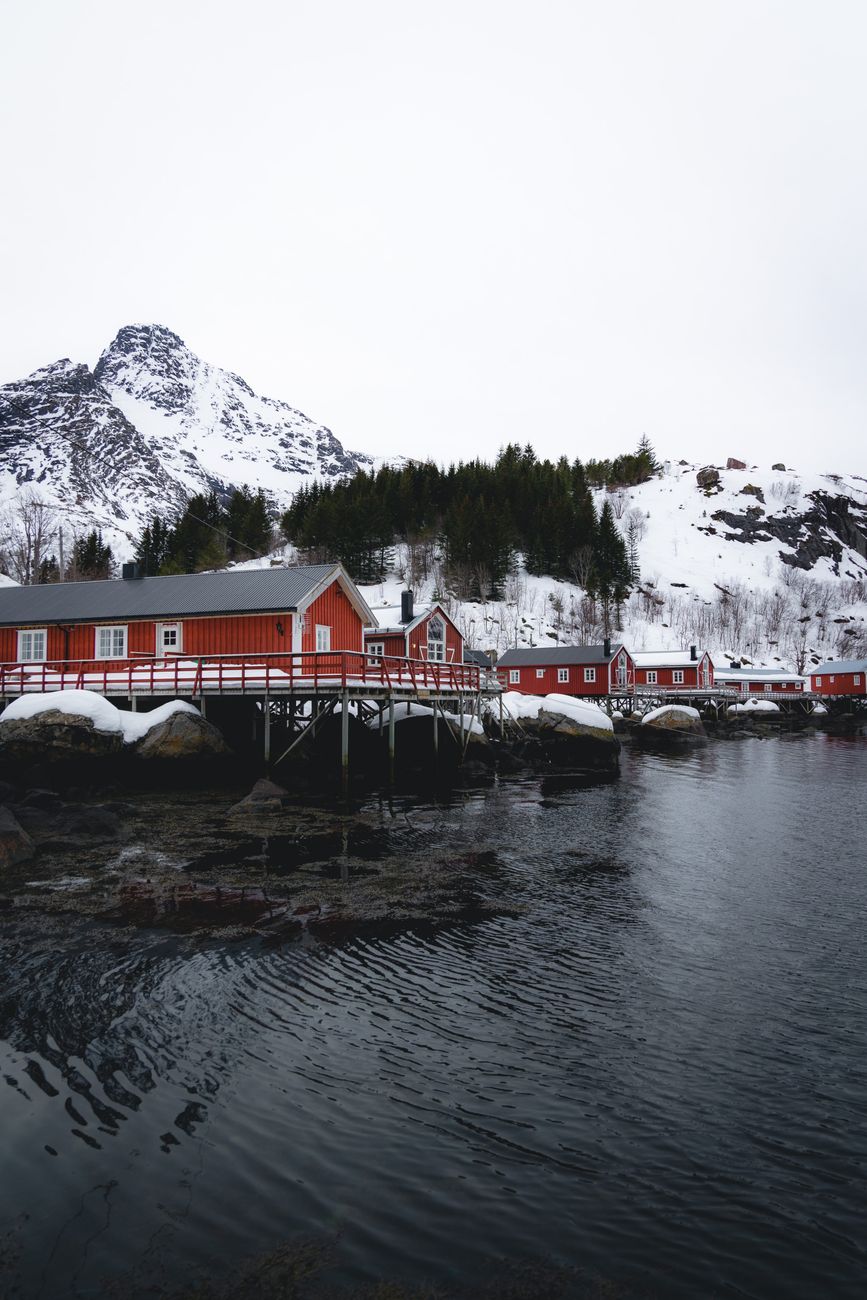
Above the 68th parallel, winter is rarely total darkness. Instead, it is an elongated dialogue with indigo, periwinkle, and pale amber. When the sun refuses to crest the craggy granite silhouettes of the Lofoten wall, the atmosphere behaves like a vast prism. For four hours around midday, a subtle watercolor glow illuminates the salt-sprayed rocks, transforming the Vestfjorden into a mirror of frosted glass.
Walking along the wind-scoured shoreline of Reine, one is struck by how sound behaves in extreme cold. The crunch of boot leather against crusty snow resonates across the harbor. The occasional cry of a white-tailed eagle echoing off basalt cliffs reminds the traveler that human presence here is merely an agreed truce with the elements.
2. Rorbuer Cabins and Sea Air
For centuries, seasonal fishermen arrived in these northern waters in open wooden boats. To survive the gale-force storms that barrel in from the Norwegian Sea, they constructed simple stilted cabins, or rorbuer, painted with cod-liver oil and red ochre pigment. Inside, pine plank floors retain the comforting smell of birch firewood and dried brine.
Modern life in these red shelters invites deliberate slowing down. With cellular connectivity deliberately ignored, the rituals of boiling water for filter coffee and watching squalls roll over the harbor become the day's primary milestones. The contrast between twenty-degree frosts outside and the crackle of cast-iron stoves inside generates an incomparable sensation of sanctuary.
"In the high latitudes, you do not fight the weather; you surrender your calendar to the tide and the barometric pressure."
3. Skrei Season and Oceanic Resilience
By late January, the ocean comes alive with the migration of Arctic cod, known as skrei, journeying from the Barents Sea to spawn. Timber drying racks, standing like prehistoric cathedral beams across the headlands, begin to fill. This is not factory fishing; it is artisanal subsistence perfected across thousands of winters. Meeting the local harbor master reveals a lineage of seafaring that spans eight generations.
As night settles, faint emerald ribbons of aurora borealis unfurl across the zenith. There are no bustling crowds or neon signs—merely the silent pulse of magnetic lines overhead and the quiet ocean breathing against timber piles below.
Share This Story:
Inspired by Nordic Expeditions?
Inquire with our correspondent desk for independent routes, ferry schedules, and private lodge recommendations.
Contact Our Desk